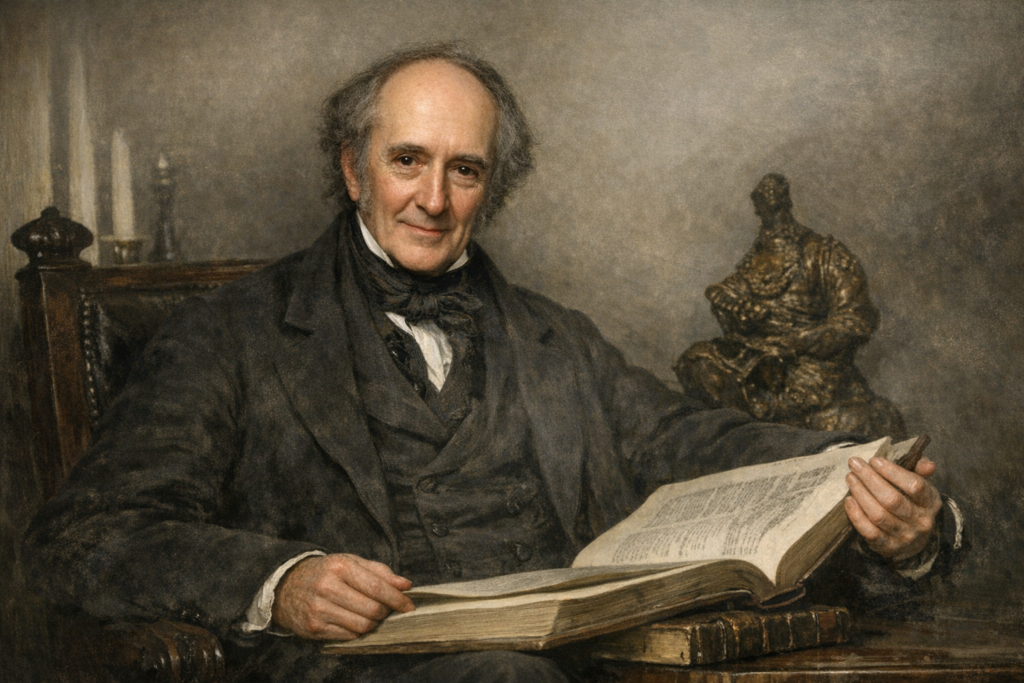
Thomas Erskine of Linlathen was a Scottish lay theologian who in the early 1800s sought to restore the theological balance between the concept of God as sovereign Ruler and God as loving Father. Erskine was an early advocate of what P. T. Forsyth would later term “holy love”—a divine love that held an infinite abhorrence towards sin and at the same time an infinite love towards the sinner. Erskine’s first two books, published in 1820 and 1822, were immensely popular and established his reputation as an innovative thinker and constructive theologian, however, his third, The Unconditional Freeness of the Gospel, raised the ire of the Church of Scotland when he took a stand against the Federal Calvinism of his day by denying that God’s love was conditional and only for an elect and chosen few. For Erskine, God was a purposeful, loving, and forgiving Father whose object had always been to restore humanity to spiritual health to the end that they become true children of God conformed to the likeness of their elder brother, Jesus Christ—that they might resemble him in character and thus enter into his joy.
Our Mission
The mission of ThomasErskine.org is to introduce a new generation of Christians to the thought and writings of this 19th century lay theologian who was a close friend of A. J. Scott, John McCleod Campbell and F. D. Maurice and who in so many remarkable ways anticipated the theology of George MacDonald, Karl Barth, and T. F. Torrance.
Our goal is to republish all of Erskine’s books and essays, but before this can be done, each of his works has to be digitized, meaning converted into editable Word documents, which, even using the best OCR software available, is a very labor-intensive process. The good news is that, as of January 2026, much of this work has been completed and beginning with Erskine’s essays, will appear first on this website before being published in print and eBook formats. The essays page can be accessed at any time from the top menu or by clicking this hyperlink: Essays. Each essay is preceded by a quick-read abstract of the work that follows.
The first of Erskine’s books we were able to get republish was his 1828 book, 𝘛𝘩𝘦 Unconditional Freeness of the Gospel. As mentioned above, this book was very controversial when it first appeared, but it is also worth noting that by the turn of the century, Erskine’s thoughts on the universal Fatherhood of God, the universal Atonement of Christ, and the freeness of the gospel, which when first presented had been denounced as heretical, had become common stock in Christian thinking.
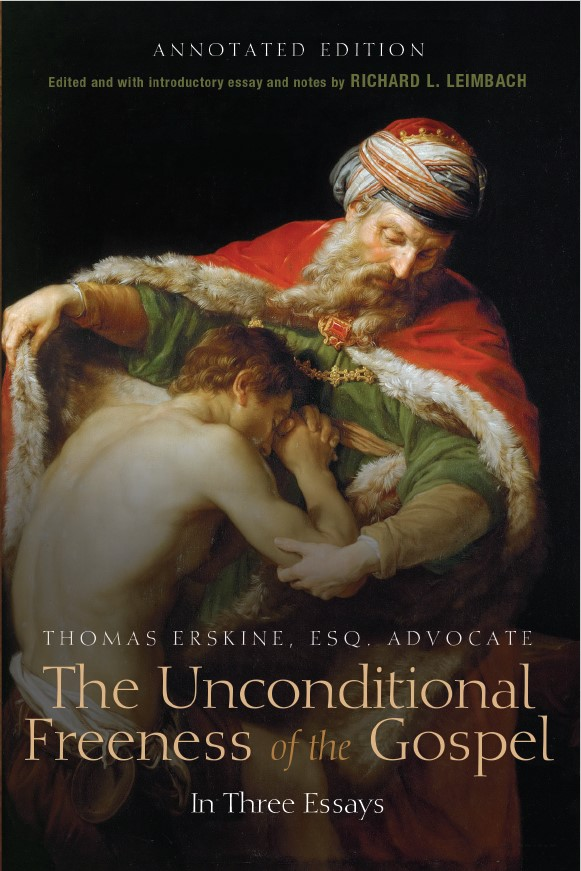
Click the image to be taken to Amazon.
Featured Article
Thomas Erskine’s Story
Thomas Erskine of Linlathen (1788-1870) was a Scottish lay theologian whose influence on Christian thought since the early 1800s has largely gone unrecognized except perhaps in academic circles. His 1828 book, The Unconditional Freeness of the Gospel, is credited with having played a major role in restoring the long-forgotten concept of the universal Fatherhood of God in his Scottish homeland.
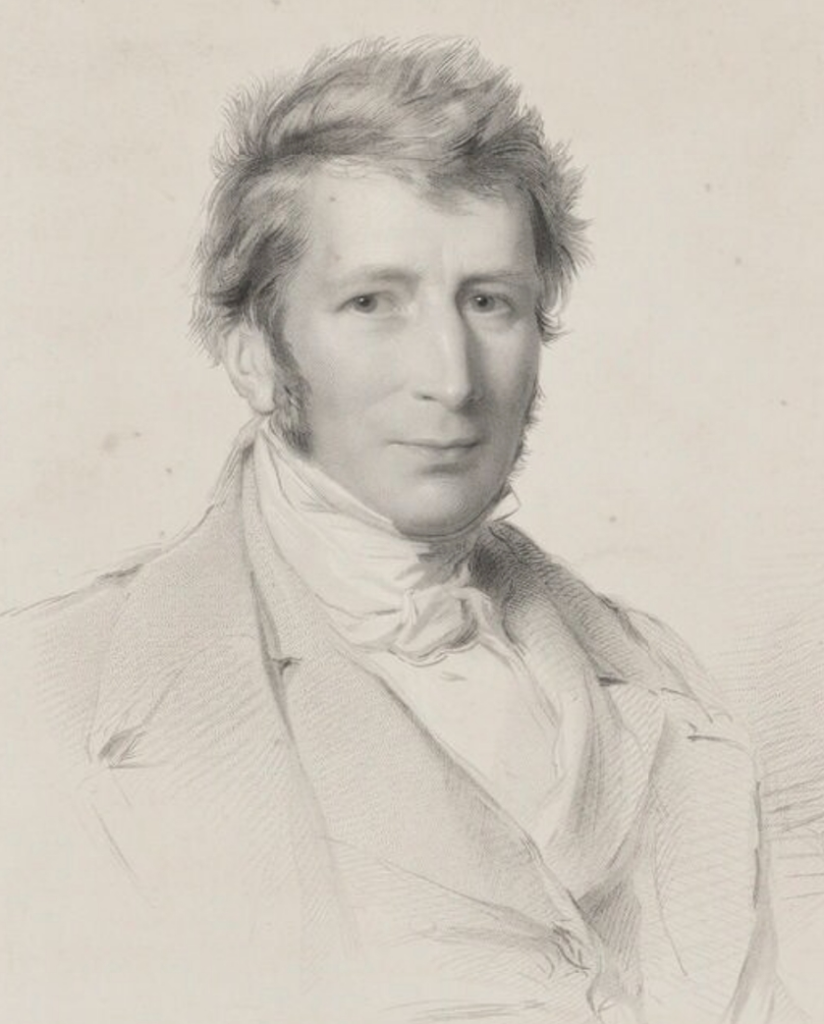
Thomas Erskine as a young man and member of the Edinburgh faculty of advocates.
Featured Essay
The Purpose of God in the Creation of Man
Erskine wrote, “I regard the principle here set forth as forming the very basis of the Gospel, proclaiming as it does God’s eternal and unchanging Purpose for man—to raise him by education into fellowship with Himself — to make him a partaker in His own righteousness and His own blessedness.”
Featured Book
The Doctrine of Election
“The election is on the righteous One and as a man becomes righteous through Christ the righteous head dwelling in him by faith, so also does he become elect.”
Featured Letter
Undated letter to J. Craig, author of the pamphlet “The Final Salvation of All Men from Sin”
Latest Blog
An Appreciation on An Essay on Faith by Thomas Erskine, Waugh & Innes, Edinburgh, 1825.
“Perfect faith supposes perfect sanctification and perfect sanctification supposes perfect faith.”
Coming Soon in Print and eBook Formats
The Collected Essays of Thomas Erskine, a collection that will include “The Purpose of God in the Creation of Man” and the full text of Erskine’s book length essay, “An Essay of Faith.”
The Spiritual Order and Other Papers. Annotated Edition, Erskine’s final and perhaps most thought-provoking work.